
Dental Technicians & Laboratories
Digital dental workflow level questionnaire · Dental Laboratories
Estimated duration: 7-9 minutes
14 questions
4 answer options
This questionnaire analyzes the current profile in CAD/CAM technology adoption in the dental laboratory. It is not an assessment: it is a diagnostic tool to understand your starting point and guide an adapted professional development plan. There are no right or wrong answers.
-
Block 1 Digital workflow maturity
-
Block 2 CAD (digital design)
-
Block 3 CAM and manufacturing
-
Block 4 Materials and technical criteria
-
Block 5 Digital communication with clinics and workflow
-
Block 6 Complex cases and technical leadership
-
Results
1
Digital workflow maturity
What is the actual digitization level of your laboratory?
A
I do not use a digital workflow or it is negligible.
B
Partial digitization (desktop scanner and basic CAD software) but the workflow is not systematic.
C
Routine digital workflow (integrated CAD design and/or CAM production)
D
Fully integrated digital workflow (CAD + CAM + systematized digital communication)
-
Block 1 Digital workflow maturity
-
Block 2 CAD (digital design)
-
Block 3 CAM and manufacturing
-
Block 4 Materials and technical criteria
-
Block 5 Digital communication with clinics and workflow
-
Block 6 Complex cases and technical leadership
-
Results
2
Digital workflow maturity
What percentage of your production is digital?
A
0–10%
B
10–40%
C
40–80%
D
80–100%
-
Block 1 Digital workflow maturity
-
Block 2 CAD (digital design)
-
Block 3 CAM and manufacturing
-
Block 4 Materials and technical criteria
-
Block 5 Digital communication with clinics and workflow
-
Block 6 Complex cases and technical leadership
-
Results
3
Digital workflow maturity
How do you foresee the evolution of digital workflows in your laboratory?
A
I foresee no significant changes. My current workflow meets client needs.
B
I want to incorporate or expand digital tools but need training and clear ROI analysis.
C
I am actively expanding, introducing new tools, materials, and training to refine workflows.
D
My laboratory is already a benchmark. Growth focuses on extreme precision, novel materials, and mentorship for clinics and peer labs.
-
Block 1 Digital workflow maturity
-
Block 2 CAD (digital design)
-
Block 3 CAM and manufacturing
-
Block 4 Materials and technical criteria
-
Block 5 Digital communication with clinics and workflow
-
Block 6 Complex cases and technical leadership
-
Results
4
CAD (digital design)
What is your proficiency level in dental CAD design?
A
I do not use CAD software. Any digital design is outsourced to milling centers.
B
I use basic CAD for simple single restorations, outsourcing complex cases.
C
I design autonomously: crowns, bridges, inlays, implant suprastructures, and removables.
D
I master advanced CAD: full-arch, bars, suprastructures, surgical guides, splints, and study models, solving system limitations with ease.
-
Block 1 Digital workflow maturity
-
Block 2 CAD (digital design)
-
Block 3 CAM and manufacturing
-
Block 4 Materials and technical criteria
-
Block 5 Digital communication with clinics and workflow
-
Block 6 Complex cases and technical leadership
-
Results
5
CAD (digital design)
How do you manage anatomy and occlusion in CAD design?
A
I do not manage it digitally. Adjustments are made chairside.
B
Basic adjustments applied to outsourced designs.
C
Standard functional control: contact points and static/dynamic occlusion, using virtual articulators when indicated.
D
Full control using virtual articulators and advanced functional occlusal parameters.
-
Block 1 Digital workflow maturity
-
Block 2 CAD (digital design)
-
Block 3 CAM and manufacturing
-
Block 4 Materials and technical criteria
-
Block 5 Digital communication with clinics and workflow
-
Block 6 Complex cases and technical leadership
-
Results
6
CAM and manufacturing
What level of digital manufacturing is integrated in your lab?
A
No in-house production. I send CAD designs to external milling centers.
B
Occasional in-house or hybrid production (complex units outsourced).
C
Integrated in-house production: milling machine and/or 3D printer.
D
Fully integrated multi-material in-house production.
-
Block 1 Digital workflow maturity
-
Block 2 CAD (digital design)
-
Block 3 CAM and manufacturing
-
Block 4 Materials and technical criteria
-
Block 5 Digital communication with clinics and workflow
-
Block 6 Complex cases and technical leadership
-
Results
7
CAM and manufacturing
How do you control the manufacturing process?
A
I do not control the process.
B
I visually inspect the finished result.
C
I have a quality assurance protocol: fit checking and phase-by-phase inspection.
D
Complete control (design → production → post-processing → validation).
-
Block 1 Digital workflow maturity
-
Block 2 CAD (digital design)
-
Block 3 CAM and manufacturing
-
Block 4 Materials and technical criteria
-
Block 5 Digital communication with clinics and workflow
-
Block 6 Complex cases and technical leadership
-
Results
8
Materials and technical criteria
What is your expertise in selecting CAD/CAM materials?
A
The clinician dictates the material.
B
I know basic materials but do not delve into technical subtleties.
C
Shared selection providing technical criteria on mechanical and aesthetic properties.
D
Autonomous recommendation based on biomechanical and clinical indications.
-
Block 1 Digital workflow maturity
-
Block 2 CAD (digital design)
-
Block 3 CAM and manufacturing
-
Block 4 Materials and technical criteria
-
Block 5 Digital communication with clinics and workflow
-
Block 6 Complex cases and technical leadership
-
Results
9
Materials and technical criteria
Are you familiar with material production parameters?
A
I am not familiar.
B
General knowledge.
C
Applied knowledge: minimum thickness, sintering parameters, crystallization cycles, and finishing protocols.
D
I integrate materials science into all design and milling decisions, diagnosing failures (fracture, fit, shade) down to design, material, or furnace cycles.
-
Block 1 Digital workflow maturity
-
Block 2 CAD (digital design)
-
Block 3 CAM and manufacturing
-
Block 4 Materials and technical criteria
-
Block 5 Digital communication with clinics and workflow
-
Block 6 Complex cases and technical leadership
-
Results
10
Digital communication with clinics and workflow
How do you manage digital communication with dental clinics?
A
Conventional communication mainly via phone. I receive physical impressions and deliver physically.
B
I receive some digital files and communicate by email or portals, but not systematically.
C
I maintain a structured digital communication workflow: file reception, digital Rx, design validation with the clinic, and documented delivery.
D
I maintain full, traceable digital communication: case management platform, real-time CAD validation with clinicians, stage documentation, and digital archiving.
-
Block 1 Digital workflow maturity
-
Block 2 CAD (digital design)
-
Block 3 CAM and manufacturing
-
Block 4 Materials and technical criteria
-
Block 5 Digital communication with clinics and workflow
-
Block 6 Complex cases and technical leadership
-
Results
11
Digital communication with clinics and workflow
What role does your laboratory play in treatment planning?
A
No involvement. I receive instructions and produce strictly what is ordered.
B
Occasional consulting, but the dentist leads all planning.
C
Active participation in selected cases: assessing prosthetic space, connections, material selection, and clinical design parameters.
D
Co-design partner: suggesting engineering solutions, flagging limits, and leveraging digital tools to elevate patient outcomes.
-
Block 1 Digital workflow maturity
-
Block 2 CAD (digital design)
-
Block 3 CAM and manufacturing
-
Block 4 Materials and technical criteria
-
Block 5 Digital communication with clinics and workflow
-
Block 6 Complex cases and technical leadership
-
Results
12
Digital communication with clinics and workflow
How do you manage laboratory remakes and technical issues?
A
Reactively. I have no protocol to identify root causes or prevent recurrence.
B
I identify common causes (CAD, material, CAM) and apply fixes, but without a systematic process.
C
I identify where discrepancies originate: scanning, CAD, CAM parameters, or post-processing, acting precisely on the defect.
D
I anticipate issues in design and production, document causes for continuous improvement, and consult transparently with the clinic when clinical variables are involved.
-
Block 1 Digital workflow maturity
-
Block 2 CAD (digital design)
-
Block 3 CAM and manufacturing
-
Block 4 Materials and technical criteria
-
Block 5 Digital communication with clinics and workflow
-
Block 6 Complex cases and technical leadership
-
Results
13
Complex cases and technical leadership
Faced with a complex case, what is your digital approach?
A
I outsource it or request external support.
B
I execute parts of the process, but design and planning are led by the clinician or an external specialist.
C
I manage the complete digital case: framework design, stage coordination with the clinic, and digital model verification prior to milling.
D
I provide technical leadership alongside the clinical team.
-
Block 1 Digital workflow maturity
-
Block 2 CAD (digital design)
-
Block 3 CAM and manufacturing
-
Block 4 Materials and technical criteria
-
Block 5 Digital communication with clinics and workflow
-
Block 6 Complex cases and technical leadership
-
Results
14
Complex cases and technical leadership
Does your laboratory serve as a benchmark, trainer, or advisor for clinics and peer labs?
Last question
A
No. My role is strictly production. I do not offer consulting or training.
B
I occasionally advise clinicians on specific technical questions, but without structure.
C
I am an active mentor for my partner clinics: advising on materials, digital workflows, and resolving complex rehabilitations.
D
My laboratory is a sectoral training hub: lecturing, sharing protocols with peers and clinics, and recognized as a leading technical authority.
-
Block 1 Digital workflow maturity
-
Block 2 CAD (digital design)
-
Block 3 CAM and manufacturing
-
Block 4 Materials and technical criteria
-
Block 5 Digital communication with clinics and workflow
-
Block 6 Complex cases and technical leadership
-
Results
Results interpretation
Profile 1
-- / 4.0
Construction 1.0 - 2.0
·
Growth 2.1 - 3.0
·
Mastery 3.1 - 4.0
Profile 1 · Construction of practice
You are at a pivotal moment: building your own practice with sound judgment and confidence. Every case you resolve today lays the foundation for the professional you will become tomorrow. Being clear about your limits and knowing when to seek support is not a limitation; it is a clinical strength that many professionals take years to develop. From this point on, the path is clear and the potential is real.
Autonomía Digital
--
0%
Conocimiento Técnico y de los materiales
--
0%
Dominio de los Procesos CAD/CAM
--
0%
CONCRETE ACTIONS FOR THE DEVELOPMENT PLAN
1
TURN WHAT YOU ALREADY DO INTO YOUR OWN PROTOCOL
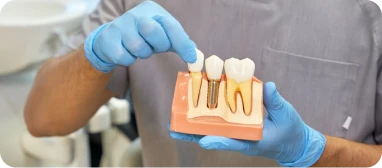
The single and partial cases in healed bone that you routinely resolve are worth much more than they seem. Document your process step by step: preparation, positioning, intraoperative decisions. Turning practice into protocol is the first leap toward conscious improvement.
2
SYSTEMATIZE THE REGISTRATION OF YOUR COMPLEX CASES
Identify which clinical variables make the difference between a predictable case and a complex one. Creating a clear decision tree reduces uncertainty in the operating room.
3
INTEGRATE GUIDED SURGERY INTO YOUR ROUTINE WORKFLOW
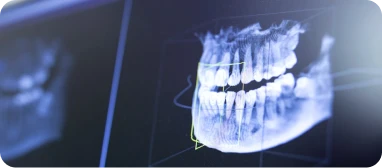
Advance from freehand placement to complete digital planning and surgical splints to optimize the three-dimensional position of the implant.
4
MASTER PERI-IMPLANT SOFT TISSUE MANAGEMENT
Long-term biological stability depends on keratinized mucosa. Incorporate grafting and flap management techniques into your procedures.
[01/04]
Results and scoring