
Dentists
Level questionnaire in implantology
Estimated duration: 6-8 minutes
18 questions
4 answer options
This questionnaire analyzes your current clinical profile in implantology. It is not an assessment: it is a conversation to understand your real starting point and guide a professional development plan. There are no right or wrong answers.
-
Block 1 Clinical experience and autonomy
-
Block 2 Planning and diagnosis
-
Block 3 Surgery and surgical techniques
-
Block 4 Implant prosthodontics
-
Block 5 Digital workflow
-
Block 6 Complications management and clinical criteria
-
Results
1
Clinical experience and autonomy
What level of autonomy do you have in implantology?
A
My confidence is in the basic surgical phase. Complex planning and managing complications still raise doubts.
B
I plan and execute with confidence. My limit is in cases with significant bone regeneration or complex full rehabilitations.
C
I master the complete workflow, including advanced cases. I occasionally rely on specialists for very specific situations.
D
My clinical judgement allows me to decide how to approach each situation. Other professionals even consult me on cases.
-
Block 1 Clinical experience and autonomy
-
Block 2 Planning and diagnosis
-
Block 3 Surgery and surgical techniques
-
Block 4 Implant prosthodontics
-
Block 5 Digital workflow
-
Block 6 Complications management and clinical criteria
-
Results
2
Clinical experience and autonomy
What type of cases can you plan and execute?
A
Simple single and partial cases, in healed bone and with favorable anatomy. This is where I feel solid.
B
In addition to single and partial cases, I address situations with moderate bone limitation. I know when to refer.
C
Wide variety of cases: single, partial, bone limitations, and conventional full-arch rehabilitations.
D
The entire spectrum up to full arches with immediate loading and cases with significant regeneration.
-
Block 1 Clinical experience and autonomy
-
Block 2 Planning and diagnosis
-
Block 3 Surgery and surgical techniques
-
Block 4 Implant prosthodontics
-
Block 5 Digital workflow
-
Block 6 Complications management and clinical criteria
-
Results
3
Clinical experience and autonomy
Approximately how many implants do you place per year?
A
Fewer than 20. Implantology has a limited role in my practice.
B
Between 20 and 80. It is a regular activity present in my daily routine.
C
Between 80 and 200. Implantology is a central part of my practice.
D
More than 200. It is a high-dedication practice, built and consolidated over time.
-
Block 1 Clinical experience and autonomy
-
Block 2 Planning and diagnosis
-
Block 3 Surgery and surgical techniques
-
Block 4 Implant prosthodontics
-
Block 5 Digital workflow
-
Block 6 Complications management and clinical criteria
-
Results
4
Clinical experience and autonomy
And what is your trend in implantology?
A
Active growth. Every year I place more implants.
B
Consolidation. The volume is stable.
C
The volume has decreased due to external factors.
D
I have referred cases to other colleagues.
-
Block 1 Clinical experience and autonomy
-
Block 2 Planning and diagnosis
-
Block 3 Surgery and surgical techniques
-
Block 4 Implant prosthodontics
-
Block 5 Digital workflow
-
Block 6 Complications management and clinical criteria
-
Results
5
Planning and diagnosis
How do you usually plan your cases?
A
Clinical examination and basic diagnostic tests: panoramic radiograph and, if needed, CBCT.
B
Beyond diagnosis, I analyze the case in three dimensions: bone volume, ideal position, and relationship to the final prosthesis.
C
I integrate 3D planning with the complete clinical workflow: risks, complications, and tailored approach.
D
Planning is the core of my practice. I integrate diagnosis, biomechanics, aesthetics, and digital workflow backwards from outcome to first incision.
-
Block 1 Clinical experience and autonomy
-
Block 2 Planning and diagnosis
-
Block 3 Surgery and surgical techniques
-
Block 4 Implant prosthodontics
-
Block 5 Digital workflow
-
Block 6 Complications management and clinical criteria
-
Results
6
Planning and diagnosis
What diagnostic tools do you routinely use?
A
Panoramic radiograph and clinical exam. In selected cases, outsourced CBCT.
B
Routine CBCT. Occasional intraoral scanner.
C
Routine CBCT and intraoral scanner in the vast majority of cases.
D
Systematic CBCT and intraoral scanner. When appropriate, photogrammetry, facial scanner, or digital mock-up.
-
Block 1 Clinical experience and autonomy
-
Block 2 Planning and diagnosis
-
Block 3 Surgery and surgical techniques
-
Block 4 Implant prosthodontics
-
Block 5 Digital workflow
-
Block 6 Complications management and clinical criteria
-
Results
7
Surgery and surgical techniques
In what types of cases do you routinely place implants?
A
Healed bone with favorable anatomy. I require predictable conditions to feel fully secure.
B
Healed bone and minor bone limitations. I place immediate post-extraction implants when conditions permit.
C
Broad caseload: healed bone, moderate limitations, immediate implants, and simultaneous bone augmentation.
D
Any bone scenario, including advanced bone augmentation and immediate loading.
-
Block 1 Clinical experience and autonomy
-
Block 2 Planning and diagnosis
-
Block 3 Surgery and surgical techniques
-
Block 4 Implant prosthodontics
-
Block 5 Digital workflow
-
Block 6 Complications management and clinical criteria
-
Results
8
Surgery and surgical techniques
What is your level of guided surgery expertise?
A
I understand the concept but have not incorporated it into clinical practice.
B
I have completed occasional cases but lack solidified criteria on when it adds true value.
C
I use it selectively with clear clinical criteria. I know when it can be safely omitted.
D
I master the complete workflow: digital planning, surgical guide design, validation, and clinical execution.
-
Block 1 Clinical experience and autonomy
-
Block 2 Planning and diagnosis
-
Block 3 Surgery and surgical techniques
-
Block 4 Implant prosthodontics
-
Block 5 Digital workflow
-
Block 6 Complications management and clinical criteria
-
Results
9
Surgery and surgical techniques
Which surgical techniques do you master?
A
Conventional full-thickness flap as primary technique. I feel secure in standard surgery with favorable anatomy.
B
In addition to flaps, minimally invasive and flapless surgery in selected cases, and basic regeneration in small defects.
C
Bone augmentation in moderate defects, straightforward sinus lifts, and implants in moderately compromised bone sites.
D
Regeneration in complex defects, advanced sinus elevation, and high-complexity procedures. Surgical variability is my daily reality.
-
Block 1 Clinical experience and autonomy
-
Block 2 Planning and diagnosis
-
Block 3 Surgery and surgical techniques
-
Block 4 Implant prosthodontics
-
Block 5 Digital workflow
-
Block 6 Complications management and clinical criteria
-
Results
10
Surgery and surgical techniques
What criteria guide your decision for immediate loading?
A
I do not perform immediate loading.
B
My primary criterion is insertion torque. If it exceeds the threshold, I consider immediate provisionalization.
C
I combine torque, implant primary stability, and occlusal clearance. The decision synthesizes several factors.
D
Comprehensive evaluation: bone quality, primary stability, occlusal biomechanics, patient profile, and systemic risk factors.
-
Block 1 Clinical experience and autonomy
-
Block 2 Planning and diagnosis
-
Block 3 Surgery and surgical techniques
-
Block 4 Implant prosthodontics
-
Block 5 Digital workflow
-
Block 6 Complications management and clinical criteria
-
Results
11
Implant prosthodontics
What type of implant prosthetics do you perform?
A
Single crowns and short bridges in posterior and anterior sectors.
B
In addition to crowns and bridges, extended partial prostheses and multiple prosthetic connection types.
C
Routine full-arch rehabilitations, closely coordinated with the laboratory.
D
The full spectrum, including immediate full-arch restorations. I integrate prosthetics right from initial surgical planning.
-
Block 1 Clinical experience and autonomy
-
Block 2 Planning and diagnosis
-
Block 3 Surgery and surgical techniques
-
Block 4 Implant prosthodontics
-
Block 5 Digital workflow
-
Block 6 Complications management and clinical criteria
-
Results
12
Implant prosthodontics
Do you place immediate provisional prostheses?
A
I do not place them.
B
In very simple, selected cases with optimal tissue conditions and low prosthetic complexity.
C
In well-selected cases, primarily single crowns in the aesthetic zone when parameters allow.
D
I incorporate them whenever indicated: tissue conditioning, aesthetic/functional validation, and emergence guiding.
-
Block 1 Clinical experience and autonomy
-
Block 2 Planning and diagnosis
-
Block 3 Surgery and surgical techniques
-
Block 4 Implant prosthodontics
-
Block 5 Digital workflow
-
Block 6 Complications management and clinical criteria
-
Results
13
Implant prosthodontics
What degree of peri-implant soft tissue management do you apply?
A
I do not consider it specifically. The focus is strictly on surgical and prosthetic phases.
B
I take biotype into account and preserve tissue during surgery, but without specific grafting techniques.
C
I condition tissue with provisionals and actively shape the emergence profile.
D
Active management across all phases: biotype, connective tissue grafts, emergence, and long-term maintenance carry the same weight as bone planning.
-
Block 1 Clinical experience and autonomy
-
Block 2 Planning and diagnosis
-
Block 3 Surgery and surgical techniques
-
Block 4 Implant prosthodontics
-
Block 5 Digital workflow
-
Block 6 Complications management and clinical criteria
-
Results
14
Digital workflow
How do you use digital tools in your practice?
A
Occasionally: communication with the lab or documentation. Not integrated into routine workflow.
B
The intraoral scanner is present in some cases, primarily in the prosthetic phase.
C
Routine intraoral scanner and digital planning in a portion of cases. The workflow is partial but growing.
D
Digital workflow integrated throughout the entire process: diagnosis, planning, surgical guide, and prosthetic phase.
-
Block 1 Clinical experience and autonomy
-
Block 2 Planning and diagnosis
-
Block 3 Surgery and surgical techniques
-
Block 4 Implant prosthodontics
-
Block 5 Digital workflow
-
Block 6 Complications management and clinical criteria
-
Results
15
Digital workflow
What is your proficiency level with guided surgery software?
A
I do not use it.
B
I have worked with some software but rely on the laboratory or manufacturer for design and validation.
C
Autonomous digital planning in tooth-supported cases. I review and validate the design prior to surgery.
D
Complete autonomy in tooth-supported and mucosa-supported cases. I catch digital workflow errors before entering the operating room.
-
Block 1 Clinical experience and autonomy
-
Block 2 Planning and diagnosis
-
Block 3 Surgery and surgical techniques
-
Block 4 Implant prosthodontics
-
Block 5 Digital workflow
-
Block 6 Complications management and clinical criteria
-
Results
16
Digital workflow
How far does your digital workflow extend?
A
Diagnostic imaging and laboratory communication. Surgery and prosthetics performed conventionally.
B
Digital planning connects with guided surgery. CAD/CAM prosthetic phase is present but not systematic.
C
Planning, surgical guide, and CAD/CAM prosthetic phase connected in most cases.
D
Fully connected digital workflow: CBCT, planning, guide, and CAD/CAM provisional, integrated from diagnosis to final outcome.
-
Block 1 Clinical experience and autonomy
-
Block 2 Planning and diagnosis
-
Block 3 Surgery and surgical techniques
-
Block 4 Implant prosthodontics
-
Block 5 Digital workflow
-
Block 6 Complications management and clinical criteria
-
Results
17
Complications management and clinical criteria
How do you handle surgical complications?
A
I pause and seek external assistance. I prefer not to proceed without clear guidance.
B
I manage basic complications. In complex situations, I consult or refer.
C
I have established criteria to manage most complications, including unforeseen events. I analyze what happened.
D
I anticipate them during planning, manage them autonomously, and document them for continuous improvement.
-
Block 1 Clinical experience and autonomy
-
Block 2 Planning and diagnosis
-
Block 3 Surgery and surgical techniques
-
Block 4 Implant prosthodontics
-
Block 5 Digital workflow
-
Block 6 Complications management and clinical criteria
-
Results
18
Complications management and clinical criteria
Faced with a significant bone defect, what would you do?
Last question
A
I avoid placement and refer. I prefer not to compromise the outcome.
B
I consider staged bone regeneration. If the defect exceeds my management capacity, I refer.
C
I address the defect with guided bone regeneration autonomously. I decide whether to regenerate staged or simultaneously.
D
I evaluate all options: staged, simultaneous, alternative techniques, or combinations. I select whichever best suits the patient and desired outcome.
-
Block 1 Clinical experience and autonomy
-
Block 2 Planning and diagnosis
-
Block 3 Surgery and surgical techniques
-
Block 4 Implant prosthodontics
-
Block 5 Digital workflow
-
Block 6 Complications management and clinical criteria
-
Results
Results interpretation
Profile 1
-- / 4.0
Construction 1.0 - 2.0
·
Growth 2.1 - 3.0
·
Mastery 3.1 - 4.0
Profile 1 · Construction of practice
You are at a pivotal moment: building your own practice with sound judgment and confidence. Every case you resolve today lays the foundation for the professional you will become tomorrow. Being clear about your limits and knowing when to seek support is not a limitation; it is a clinical strength that many professionals take years to develop. From this point on, the path is clear and the potential is real.
Autonomía clínica
--
0%
Madurez digital
--
0%
Competencia prostodóntica
--
0%
CONCRETE ACTIONS FOR THE DEVELOPMENT PLAN
1
TURN WHAT YOU ALREADY DO INTO YOUR OWN PROTOCOL
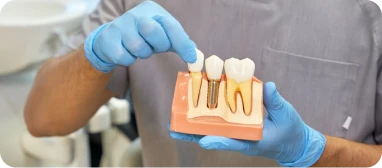
The single and partial cases in healed bone that you routinely resolve are worth much more than they seem. Document your process step by step: preparation, positioning, intraoperative decisions. Turning practice into protocol is the first leap toward conscious improvement.
2
SYSTEMATIZE THE REGISTRATION OF YOUR COMPLEX CASES
Identify which clinical variables make the difference between a predictable case and a complex one. Creating a clear decision tree reduces uncertainty in the operating room.
3
INTEGRATE GUIDED SURGERY INTO YOUR ROUTINE WORKFLOW
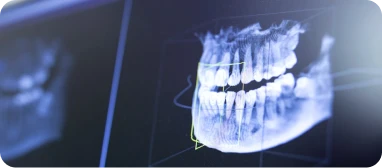
Advance from freehand placement to complete digital planning and surgical splints to optimize the three-dimensional position of the implant.
4
MASTER PERI-IMPLANT SOFT TISSUE MANAGEMENT
Long-term biological stability depends on keratinized mucosa. Incorporate grafting and flap management techniques into your procedures.
[01/04]
Results and scoring